
Long restaurant wait times don’t just frustrate guests — they quietly eat into your revenue, damage your reputation, and burn out your front-of-house team. A line out the door might look like a good problem to have, but when that line stops moving, the people in it start checking review sites instead of the menu. The real challenge? Most fixes don’t require another body on the floor. They require a smarter way to manage the wait.
Here’s how to shrink restaurant wait times without adding a single staff member, from rethinking your waitlist to improving how tables turn.
Why long wait times hurt revenue
When guests hear “45 minutes” on a Tuesday night, they don’t just get annoyed — they often leave. Even those who stay may order less, skip dessert, or never return. Excessive restaurant wait times reduce the number of parties you can seat per shift, directly capping your covers. Worse, that bottleneck creates a ripple effect: servers get triple-sat, the kitchen gets slammed in waves, and service quality drops. Over time, those rough experiences show up as 3-star reviews mentioning “waited forever for a table” — a permanent digital scar that scares off future diners. Reducing wait times isn’t just about hospitality; it’s about protecting the revenue you’re already leaving on the sidewalk.
Common causes of waitlist chaos
Most waitlist headaches don’t start with a lack of tables. They start with broken communication. Hosts guess wait times based on gut feel, large parties show up unannounced, and parties that were quoted 20 minutes suddenly hit 40 because a couple of two-tops camped for an hour after paying. Add in no-shows and phone calls asking “how long now?” and your host stand becomes a triage unit. Without a clear system, restaurant wait times balloon unpredictably, and guests end up pacing the entryway, blocking traffic and growing more impatient by the minute.
Why paper waitlists fail
If you’re still scribbling names on a clipboard, you’re fighting a modern problem with a tool from a different era. Paper waitlists can’t update guests automatically. They don’t notify someone who wandered to the bar. They can’t text a warning that their table is almost ready. Handwriting becomes a guessing game, pages get lost, and no one can tell if the Simpsons were seated five minutes ago or are still waiting outside. Worst of all, paper gives you zero data — you can’t see patterns in no-shows, average wait times, or peak demand hours. That blindness keeps restaurant wait times higher than they need to be.
Digital waitlist management
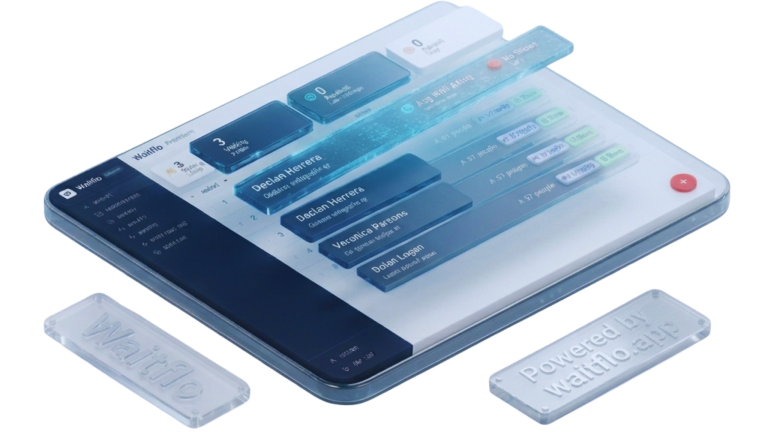
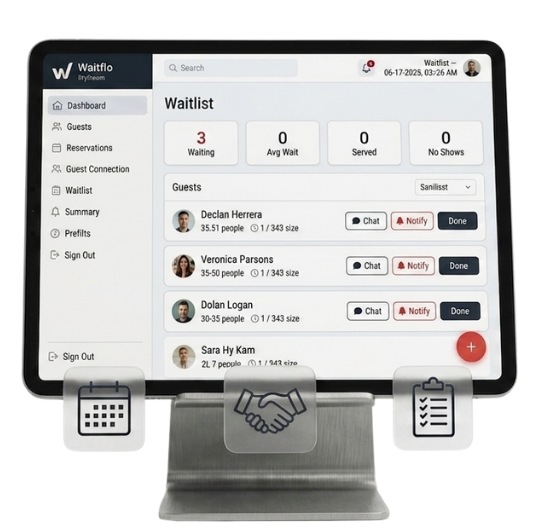
A digital waitlist removes the guesswork. Instead of a clipboard, your host uses a tablet or an app that tracks every party in real time. When a table frees up, the system instantly knows who’s next and can quote accurate wait times based on actual table status, not instinct. This alone cuts perceived wait time because guests trust the number they’ve been given. Staff can see the entire floor at a glance, prioritize large parties, and even manage the list remotely. The best part? Many digital waitlist tools (like Waitflo) run on devices you already own, require no installation, and include features that actively reduce restaurant wait times without adding headcount — think automatic time predictions and visual floor status indicators that turn the host into an air traffic controller rather than a greeter glued to a paper sheet.
QR self check-in
The line at the host stand is often its own source of delay. When five parties arrive simultaneously and one host has to answer the phone, take down names, and estimate a wait, things back up fast. QR self check-in changes that equation. Place a simple QR code at the entrance or on a sidewalk sign. Guests scan it, enter their party size and phone number, and are added to the waitlist instantly — no host interaction needed. This eliminates data entry errors, captures contact information cleanly, and frees your host to manage seating and hospitality rather than being a scribe. Self check-in streamlines the very first step of the guest journey, smoothing the arrival experience and shaving minutes off restaurant wait times right from the curb.
Automated guest notifications
The biggest psychological driver of wait frustration is uncertainty. Guests checking their watch every 90 seconds, jockeying for position near the host stand, wondering if they’ve been forgotten. Automated text notifications solve this. When a table is ready, the system pings the guest automatically. More advanced setups let guests reply “on my way,” so you’re not holding a table for someone who wandered three blocks away. This allows people to wait comfortably in the car, at the bar, or outside — reducing lobby congestion and making the wait feel shorter. Automated notifications also dramatically cut down on no-shows, because a text is harder to ignore than a shouted name. Every party that no-shows extends the wait for everyone else, so plugging that leak directly lowers restaurant wait times for in-house guests.
Improving table turnover
Shorter waits don’t only come from managing the line; they come from what happens after guests are seated. Optimizing table turnover without rushing diners is a delicate art. Start with pre-bussing: clearing empty plates and glassware throughout the meal signals attentiveness and subtly prepares the table for the next phase. Digital payment solutions that let guests pay at the table via QR code or handheld terminal can knock 5–10 minutes off the end of a meal. Train staff to notice when guests have finished and offer coffee or dessert rather than dropping the check too early — but have the check ready when they’re clearly done. Smart restaurants also analyze turn times by table type, identifying which sections hold parties too long and adjusting reservation pacing accordingly. When paired with a digital waitlist that shows exactly who’s waiting, this visibility creates a sense of urgency that encourages servers and bussers to turn tables efficiently without ever making a guest feel pushed. Faster turns mean fewer people stuck in limbo, directly compressing restaurant wait times.
Final thoughts
Reducing restaurant wait times doesn’t demand a bigger payroll — it demands better tools. By replacing paper with digital waitlists, letting guests check themselves in via QR, automating notifications, and tightening table turnover, you can seat more covers per shift, improve guest satisfaction, and protect your brand without burning out your team. The technology to do all of this already exists, and it’s far more accessible than most operators think.
Looking for a simpler way to manage guest wait times? Try Waitflo free. https://www.waitflo.app/