
An empty table reserved for a party that never arrives isn’t just a minor headache — it’s lost revenue, wasted labor, and a hit to your team’s morale. No-shows and last-minute cancellations hurt restaurants of every size. But with the right communication, clear policies, and technology, you can dramatically reduce restaurant no shows. Here’s how to protect your dining room and build a more reliable guest base.
Why no-shows hurt restaurants
When a party books a table and then doesn’t show, the damage spreads quickly. That table sat empty during peak hours while you turned away walk-in guests who would have happily filled it. Servers lose tips, the kitchen’s flow gets disrupted, and you’re still paying the staff scheduled for those covers. A single Friday-night no-show can mean hundreds of dollars in lost income. Over a month, the numbers become staggering. According to industry data, restaurants lose up to 20% of booked covers to no-shows and late cancellations. To reduce restaurant no shows, you have to treat them as a core operational challenge — not just an unlucky part of the business.
Confirmation messages
The first line of defense is the confirmation that arrives the moment a guest books. This message isn’t just a receipt; it’s an opportunity to establish accountability. An immediate SMS or email should clearly state the date, time, party size, and location. It should also include a simple option to confirm, modify, or cancel. When guests actively confirm their reservation — even with a single tap — they make a psychological commitment that raises the odds they’ll show up. A booking that vanishes without acknowledgment feels optional. One that requires a response feels like a firm plan. This small friction separates casual window-shoppers from guests who genuinely intend to dine.
Reminder notifications
A confirmation alone isn’t enough. Life gets busy, and a reservation made on Tuesday for Friday dinner can easily slip a guest’s mind. Therefore, reminder notifications sent at strategic intervals are one of the most effective tools to reduce restaurant no shows. Best practice is a two-step sequence: a polite nudge 24 hours before the reservation, and a final reminder an hour ahead of the booking. Both should include all the details again and, critically, an easy way to cancel or modify the reservation. When guests can release their table with one click, you gain the chance to rebook it. Without that simple cancellation path, many no-shows happen because guests feel awkward about calling and simply ignore the reservation.
Guest communication
Reminders and confirmations are vital, but true guest communication is a two-way street. The best reservation systems allow guests to reply to messages — to ask for a high chair, request a quiet corner, or let you know they’re running ten minutes late. When guests feel heard, they become more invested in the relationship. A restaurant that texts, “We see you’re a few minutes away; your table is ready and waiting,” turns a potential no-show into a loyal customer who appreciates the grace. Open communication, even when automated, builds accountability. Guests who know a real team is on the other end are far less likely to abandon their reservation. This responsiveness, combined with a smart reminder cadence, can slash no-show rates by half or more. For a deeper look at automating these interactions, read our guide on waitlist management software.
Reservation policies that reduce restaurant no shows
Technology works best when backed by clear, enforceable reservation policies. One of the most effective strategies to reduce restaurant no shows is requiring a credit card to hold a table and clearly stating a cancellation window — typically 24 hours. If a party cancels late or doesn’t show, a modest per-person fee is charged. This policy isn’t punitive; it’s about mutual respect. Many operators worry about scaring guests away, but the data tells a different story. Guests who are serious about dining out will happily provide a card. The ones who won’t are often the highest no-show risks. Communicating the policy clearly during booking, in confirmations, and in reminders sets expectations and nearly eliminates casual no-shows. You can even sweeten the deal by offering a small incentive, like a complimentary dessert, for honoring the reservation.
Digital reservation systems
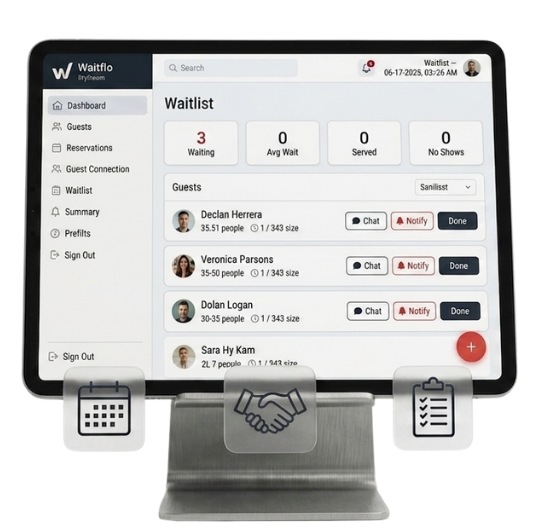
Paper books and spreadsheets simply can’t fight no-shows effectively. A digital reservation system automates all the communication steps that manual processes miss. It instantly sends confirmations and reminders via SMS or email without your team lifting a finger. Moreover, it can detect duplicate bookings or patterns of suspicious behavior. Most importantly, it captures a record of every no-show, allowing you to identify repeat offenders and block or flag them. When a digital system manages the flow, your host no longer has to remember who needs a call or which table might open up. The system handles the heavy lifting, making it effortless to implement policies and follow up. Choosing restaurant reservation software that integrates waitlist and table management also ensures that when a cancellation does come in, that table immediately becomes available for walk-ins or waitlisted parties — capturing revenue that a paper book would have missed.
Tracking customer behavior
No-shows leave a data trail, and smart restaurants use it. Over time, your digital reservation system builds a history for each guest. You’ll see who reliably attends, who cancels at the last minute frequently, and who ghosts without a trace. With this information, you can tag or grade guests. A guest with multiple no-shows might be required to provide a deposit for future bookings or may be limited to walk-in status only. Conversely, your most reliable diners can be rewarded with priority access or special perks, which encourages continued loyalty. This approach isn’t about punishing guests; it’s about protecting your business while treating your best guests exceptionally well. Tracking behavior turns a blind frustration into actionable intelligence that helps reduce restaurant no shows over the long term.
Final thoughts
No-shows don’t have to be the cost of doing business. By combining timely confirmations, reminder sequences, two-way communication, clear policies, and a digital system that automates everything, you can significantly reduce empty tables and lost income. Consistency is key — every booking gets the same thoughtful treatment, and every guest understands the commitment.
Waitflo helps restaurants send automated reminders and guest updates, manage reservations with smart policies, and track attendance patterns — all from one simple platform. Try it free at waitflo.app and start filling more tables tonight.